

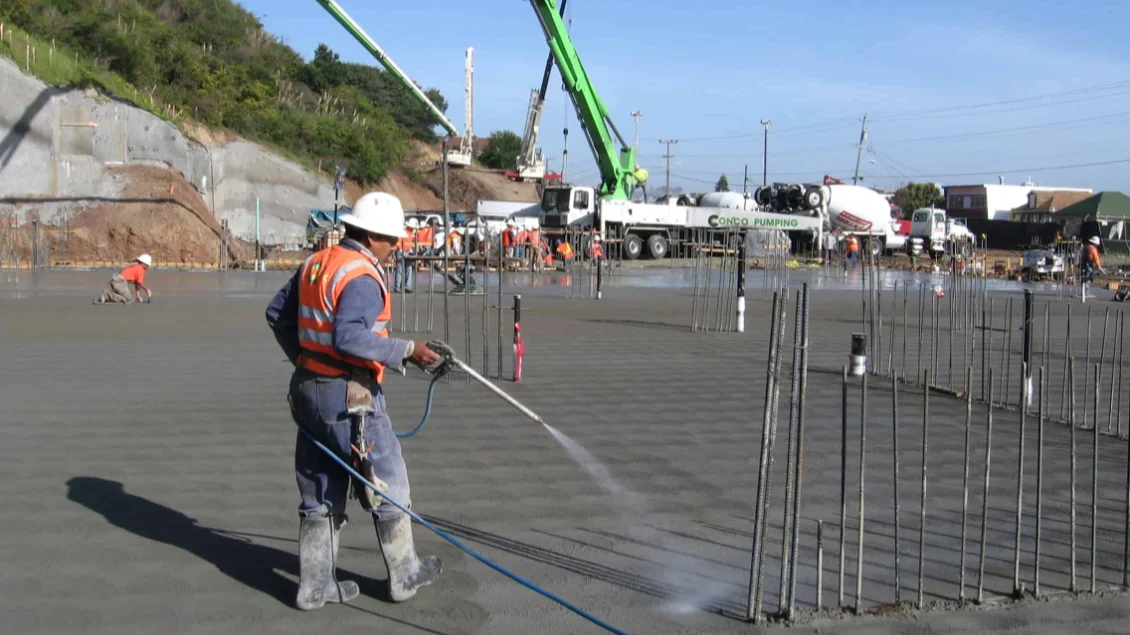
Concrete is a fundamental construction material that builders laud for its strength, resilience, and versatility. However, please remember that its long-term performance hinges on proper concrete curing. For this reason, many residential, commercial, and industrial project managers ask, “How long after pouring concrete can you drill into it?”
Whether you’re constructing driveways, installing steps, building reinforced slabs, or excavating deep footings, understanding the recommended curing time is not only critical, but empowering. This knowledge helps prevent cracking, minimises load-bearing capacity, avoids costly repairs, and ensures a seamless, hassle-free project.
As a trusted provider of reliable and cost-effective Brisbane core drilling services since 2003, we offer valuable insights. However, it’s ultimately your responsibility to take charge of your project and ensure its long-term success.
Key Takeaways
- Concrete must cure properly before drilling to avoid damage and ensure structural integrity.
- Concrete curing is the process where moisture and time allow the mix to gain strength through hydration after pouring.
- Concrete strength increases over time, typically gaining substantial strength over a 28‑day period.
- For heavy‑duty or structural drilling, waiting up to 28 days before drilling is the safest practice.
- Factors like concrete mix, temperature, humidity, and curing conditions influence how long it takes before drilling is safe.
- Using appropriate drilling techniques affects how early drilling can be done safely.
Concrete Curing Explained
Concrete curing is the process of preserving sufficient moisture, temperature, and time conditions after placing concrete to ensure proper hydration, strength, and resilience. Curing provides concrete with the appropriate environment to harden properly and ensure optimum results.
Combining water and cement initiates the hydration process, forming bonds that confer hardness and structural integrity to the material. Premature concrete drying compromises hydration, resulting in brittle, crack-prone concrete.
Industry experts typically recommend a one-week curing period for regular cement and longer durations for high-strength versions. The process may take weeks to complete. Although concrete may seem solid or durable for the first few days, it continues to gain strength over the next month or more.
The Usual Curlng Timeline
Concrete gradually increases strength and durability over a 28-day period, which includes the following milestones:
- 24 to 48 hours: The concrete becomes hard enough to withstand walking.
- 7 days: The concrete reaches an estimated 70% of its strength.
- 28 days: The concrete reaches its maximum 100% strength.
Please remember that this timeline is dependent on the specific formula, environmental conditions, and project specifications.
When Is Concrete Drilling Safe?
Patience is key when drilling into concrete. We recommend waiting at least seven days, by which time the concrete will have gained substantial strength and resistance to damage. For heavy-duty projects or structural anchoring, waiting for 28 days is the prudent choice, allowing the concrete to strengthen significantly and preventing long-term structural damage.
Conditions Affecting Curing Duration Before Drilling
The following factors affect curing duration before drilling:
- Concrete formula: High-performance or rapid-set concrete becomes stronger than its regular counterparts. Some manufacturers include formula accelerators to minimise waiting times and facilitate project timelines.
- Surrounding temperature and humidity: Warm and dry conditions facilitate faster hydration times. In contrast, wet and cold temperatures can slow down the curing process.
- Load prerequisites: Safety standards may require full-strength curing of up to 28 days for heavy-duty applications. On the other hand, safety protocols typically allow for earlier drilling times on smaller projects.
- Drilling technique: Core and diamond drilling are minimally disruptive, allowing earlier use. Conversely, impact drilling may cause fresh concrete to crack. If you are wondering how long a typical job takes, see our guide on how long core drilling takes.
- Specific curing strategy: The use of appropriate water curing techniques, curing blankets, or curing compounds facilitates enhanced strength over time. On the other hand, poor curing methods can render the concrete brittle and prone to cracking.
Hazards of Drilling Into Partially Cured Concrete
Drilling prematurely, especially into partially cured and incohesive concrete, can produce serious long-term repercussions. These risks should be your primary considerations for your drilling timeline.
- Cracking or spalling: Early drilling can cause the concrete surface to crack or deteriorate the structure within its interior (internal spalling), compromising structural integrity and leading to costly repairs.
- Weakened load-handling capacity: Anchors integrated into premature concrete may fail structurally, potentially compromising safety and causing long-term damage.
- Reduced adhesion: Drilling prematurely may cause adhesive anchors or epoxy resins to latch poorly onto fresh concrete, resulting in slipping or failure.
- Dusting and surface deterioration: Soft or permeable concrete surfaces can spall during drilling, particularly with rotary hammers.
For these reasons, we recommend waiting for seven to 10 days if you’re using a diamond-tipped core drill. Concrete usually reaches 70% of its design strength after one week. Depending on the concrete strength gain, surrounding temperatures, load requirements, and hole size and depth, waiting for two to three weeks is the safer option. The concrete would have reached full strength by then.
Recommended Procedures for Concrete Drilling
Efficient concrete drilling requires meticulous preparation and attention to detail. Taking proactive steps ensures optimum structural integrity and a successful project timeline. Following these best practices will help you achieve these objectives:
- Conduct a moisture test: Use a surface moisture meter or calcium chloride test to determine the concrete’s moisture levels. A high moisture content may compromise adhesive performance and indicate insufficient curing.
- Determine compressive strength: A rebound hammer or a compression test report can be used to determine the concrete’s compressive strength before drilling.
- Use the appropriate drill bit: Consider diamond core bits for high-accuracy applications and carbide-tipped masonry bits for other projects. The bit must match the concrete’s hardness and aggregate strength. If you are still deciding between drilling and cutting for your project, see our comparison of core drilling vs concrete cutting.
- Use a vacuum or a dust extraction system: This equipment can significantly minimise silica dust exposure in enclosed surroundings or indoor environments, offering workers long-term peace of mind.
- Avoid percussion or hammer settings on fresh concrete: Using impact-based drilling on fresh concrete can cause cracks, spalls, surface damage, loose bonds between the steel and the adjacent concrete, and reduced load capacity. We recommend using rotary-only settings on fresh concrete to prevent these scenarios and ensure a successful project.
Fast-Track Solutions for Projects With Tight Deadlines
Some projects with tight deadlines cannot accommodate a 28-day concrete curing process. You can fast-track your project by following these strategies:
- Use fast-setting concrete mixes: Some concrete formulas have accelerators that facilitate faster hydration and gain strength rapidly, allowing you to drill the concrete after one to three days. Many contractors use these concrete mixes for smaller applications, such as setting posts, repairing sidewalks, and anchoring fixtures.
- Consider post-installed anchors: Some manufacturers have specifically designed these anchors for use with fresh concrete. Although they can be pricey, they can streamline urgent project deadlines.
- Use pre-planned inserts or sleeves: Integrating sleeves or conduit into the initial pour can prevent post-curing drilling, saving time and fast-tracking your project.
As a trusted provider of expert concrete drilling and sawing services since 2003, we recommend using templates or embedded markers to enhance drilling time and accuracy. To achieve optimal results, follow the anchor system manufacturer’s guidelines on minimum concrete strength and curing. Documenting curing activities can prove compliance with engineering safety and industry standards.
FAQs
How long should you wait before core drilling into new concrete?
For most concrete core drilling jobs, it is safest to wait at least seven to 10 days before drilling into newly poured concrete, especially when using diamond-tipped core bits and low-impact methods. By around seven days, concrete usually reaches about 70% of its full strength, which gives it better resistance to cracking and surface damage. For structural drilling, anchor holes, reinforced concrete, utility penetrations, or heavy-duty applications, waiting 28 days is the safer choice because the concrete has had time to reach its full design strength.
What happens if you drill into new concrete too soon?
Drilling into concrete too early can cause cracking, spalling, loose drill holes, surface deterioration, and weaker anchor performance. Fresh concrete may look hard after a few days, but it continues curing and gaining strength for weeks. If the slab has not developed enough strength, drilling can create microfractures or damage inside the concrete that may not be obvious at first. Adhesive anchors or epoxy may also bond poorly if moisture levels are still too high. Waiting longer helps protect the slab’s strength, finish, and long-term performance.
What affects how soon concrete can be drilled?
Several factors affect how soon concrete can be drilled, including the concrete mix, weather, humidity, curing method, load requirements, drilling technique, and hole size. Rapid-set or high-performance concrete may gain strength faster than a standard mix. Warm, dry conditions can speed hydration, while cold or wet conditions may slow curing. Heavy-duty or structural work usually needs a longer wait than small non-structural holes. Diamond and core drilling are less disruptive than impact drilling, while hammer settings on fresh concrete can increase the risk of cracking and surface damage.
Does spraying water on concrete help it cure?
Yes, spraying water on concrete can help it cure properly by retaining moisture during the hydration process. Concrete needs moisture to develop strength, and if it dries too quickly, it can become brittle and more likely to crack. The page recommends curing concrete for about a week and spraying it several times daily after the surface has settled and lost its shine. This is especially helpful in hot or dry weather. However, too much water in the original mix can weaken concrete, so curing moisture and mix water should not be confused.
How long after pouring concrete can you screw into it?
For light-duty screwing or smaller fixings, concrete may be ready after three to seven days, but waiting one full week is generally safer. By this stage, the concrete has gained a significant amount of strength and is less likely to chip, crack, or produce weak anchor points. For heavier fixings, structural supports, foundation bolts, rebar dowels, or high-load applications, it is better to wait closer to 28 days. The right timing depends on the concrete strength, anchor type, hole depth, curing conditions, and the load the fixing must support.
Conclusion
Understanding critical concrete curing schedules, utilising the appropriate equipment, and adhering to established methods are essential for ensuring a successful and resilient installation. Thoughtful, meticulous planning and attention to detail can make all the difference between long-term project success and failure.
Contact us today to discuss your project requirements, schedule an appointment, receive a personalised, upfront quotation, arrange an on-site inspection, and discover premium concrete drilling solutions that guarantee a seamless, hassle-free project.