

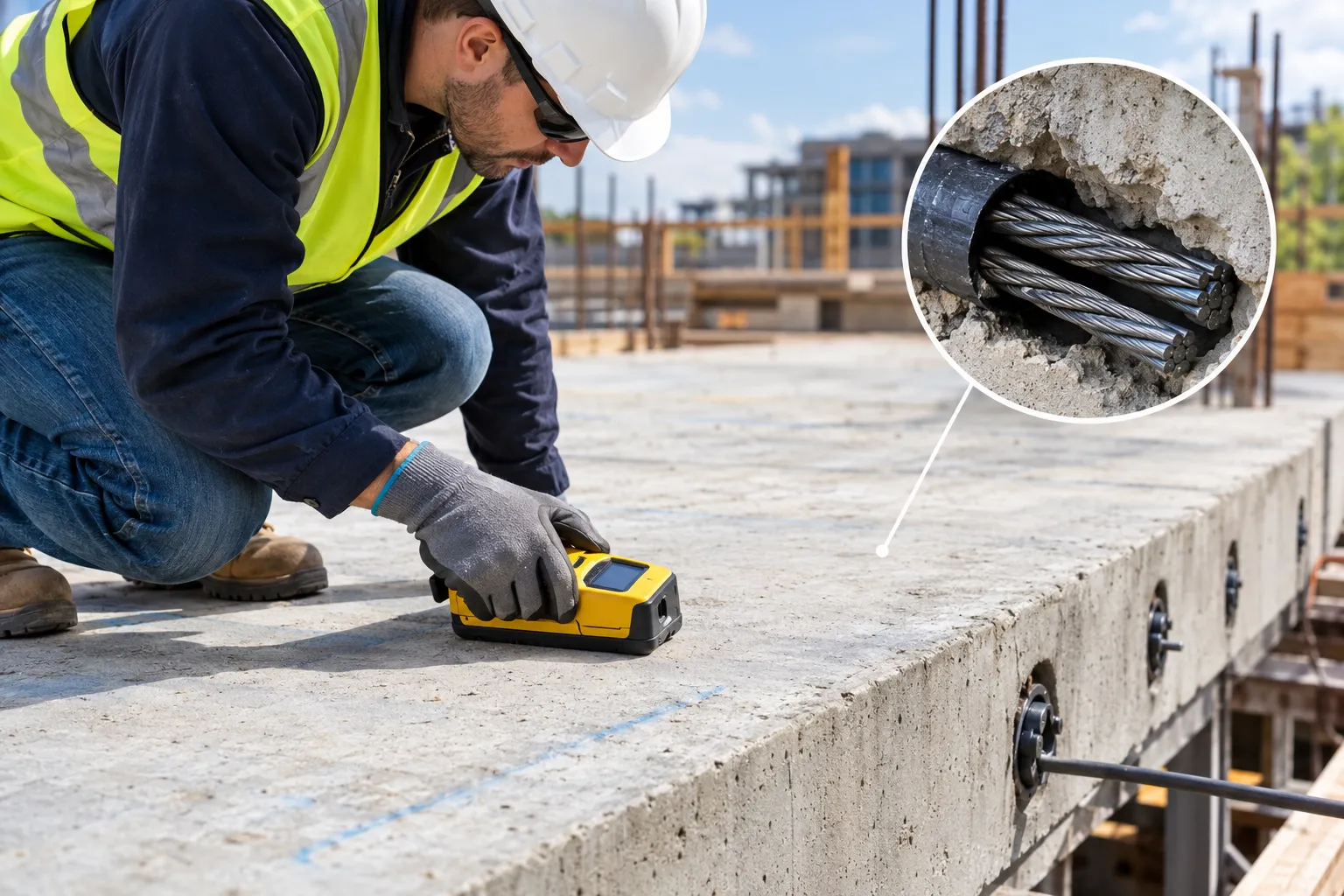
Renovations, new openings, or structural changes to a commercial building often involve post-tensioned concrete with steel cables. Also known as tendons, these sturdy steel cables are stretched tight and locked in place to hold the slab together under constant pressure.
Tendons are a common and effective strategy for building strong, thin floors and car parks without needing many steel support columns. However, the stored tension must be diverted somewhere safe if a tendon is cut. Otherwise, you might compromise long-term structural integrity.
If you’re considering investing in reliable Brisbane core drilling services, understanding the nuances of post-tensioned concrete before starting any drilling or sawing project isn’t a mere technical detail—it affects safety, cost, and your project timeline.
Key Takeaways
- Post-tensioned concrete contains tensioned steel tendons, which can create serious safety risks if accidentally cut or damaged during concrete work.
- Identifying the construction method before cutting is essential, particularly for slabs, beams, car parks and other structural concrete.
- Plans and construction records can help locate tendons, but these should be supported by professional scanning and service detection before work begins.
- Concrete scanning helps identify embedded tendons and other services, allowing contractors to plan cutting locations and minimise the risk of hitting critical components.
- Experienced concrete-cutting professionals should assess the site, using appropriate detection, planning and cutting methods to protect workers, structures and surrounding areas.
This blog will explain why identifying post-tensioned concrete matters, helping you make informed decisions for your project, prioritise safety, and gain long-term peace of mind.
What Happens When a Tendon Is Cut
A post-tensioned cable is under tremendous, constant pressure, often equal to several tonnes. If a saw or drill suddenly strikes, the cable can snap back violently, eject concrete debris, and damage the anchor points at either end of the slab. Worse, this incident can compromise the safety of workers on-site and compromise the slab’s long-term structural integrity. In some instances, the entire project site may need a thorough engineering assessment and repair before work can resume safely.
According to Safe Work Australia’s Key Work Health and Safety Statistics report, getting struck by moving objects accounts for 16.0% of all serious workers’ compensation claims in Australia. Construction remains one of the highest-risk industries for this kind of incident, recording 37 worker fatalities in 2024 alone.
A severed tendon under load falls under the category of sudden, forceful, moving-object injury. For this reason, reputable contractors must treat identifying tension cables before cutting as a non-negotiable step to enhance safety, ensure compliance, avoid penalties and delays, and deliver long-term peace of mind.
Beyond the safety risk, the financial repercussions are also worth considering. Repairing a damaged tendon usually means hiring a structural engineer, re-anchoring or splicing the cable, and occasionally reinforcing the surrounding concrete.
Instead of creating a simple plumbing or air-conditioning duct opening, your project becomes more complicated and incurs a repair bill worth tens of thousands of dollars. Worse, you must deal with time-consuming delays that significantly hinder your project’s progress.
Guesswork Is Never An Option
Post-tensioned slabs can be risky and unpredictable. You must remember that cable layouts vary among buildings and even among different areas of the same structure, depending on when it was built and who engineered it.
Older buildings may have incomplete or missing plans, which is why a highly experienced provider of Brisbane road sawing services will always scan the area using innovative ground-penetrating radar (GPR) or X-ray imaging to determine the precise locations of tendons, steel rebar, and conduits before they cut the slab.
This critical step means efficient concrete cutting doesn’t involve any risky guesswork. Identifying post-tensioned concrete allows the staff to determine where they can and cannot cut. In some instances, the scan will reveal that a planned opening needs to shift a few centimetres to avoid a cable run entirely, which is a far better outcome than striking it and setting your project back considerably.
Key Considerations When Hiring a Concrete Cutting Company
Investing in trusted concrete-cutting services requires proactive measures. Ask your candidates about their mandatory procedures for scanning post-tensioned cables and reinforced steel. Concrete cutting companies that take these measures seriously are worth considering.
Experienced, reliable contractors usually offer an extensive range of cutting and drilling services for various applications, including:
- Core drilling for clean, precise openings.
- Wall drilling for penetrations through vertical structures.
- Road sawing for cutting through driveways, car parks, and external concrete surfaces.
Good communication matters, too. Before work starts, a reputable service provider gives a clear explanation of the scan’s findings, suggested adjustments to the original plan, and how the crew intends to work around any tendons or services identified. If a company can’t answer basic questions about how they handle post-tensioned slabs, that’s a considerable red flag.
Identifying post-tensioned concrete before cutting isn’t an extra precaution; it’s a critical safety measure that helps protect the workers, the structure, and the surrounding area. Hiring a concrete-cutting company that prioritises this aspect protects your budget and your project timeline, providing you with peace of mind and reassurance.
At Cutrite, we always put safety and precision first. Our innovative GPR and X-ray technology can identify post-tensioned concrete and facilitate a smooth project. Book an appointment today to discuss your vision and bring your commercial project in Australia to life.
Frequently Asked Questions (FAQs)
What signs indicate my building has post-tensioned concrete?
You often cannot identify post-tensioned concrete just by looking at the structure’s facade. Buildings from the 1970s onward, especially car parks and multi-storey structures, commonly use it. A concrete cutting company can confirm this with a pre-cut scan rather than relying on guesswork or building age alone.
What scanning method can identify tendons before cutting?
Most contractors use ground-penetrating radar (GPR), sometimes paired with X-ray imaging for greater accuracy in complex areas. Both methods map cables, reinforcing steel, and conduits beneath the surface without damaging the slab first.
Is scanning necessary for small jobs, like a single core hole?
Even a single core hole can sever a tendon if it lands in the wrong spot. The size of the opening doesn’t diminish the risks. For this reason, we strongly recommend scanning the slab, regardless of the project’s scope and complexity.
How much time does scanning add to a project?
Scanning the concrete structure usually takes a few hours instead of days. Given the cost and delay of repairing a severed tendon, this upfront time is a small trade-off for avoiding costly and lengthy project delays.
Who covers the cost if a contractor damages a tendon during cutting?
Determining who will shoulder this cost depends on whether proper scanning and precautions were done before cutting the structure. We strongly recommend confirming this aspect in your contract to prevent confusion and misunderstandings. Better yet, hire only a reputable concrete-cutting company that emphasises safety and has established clear procedures.