

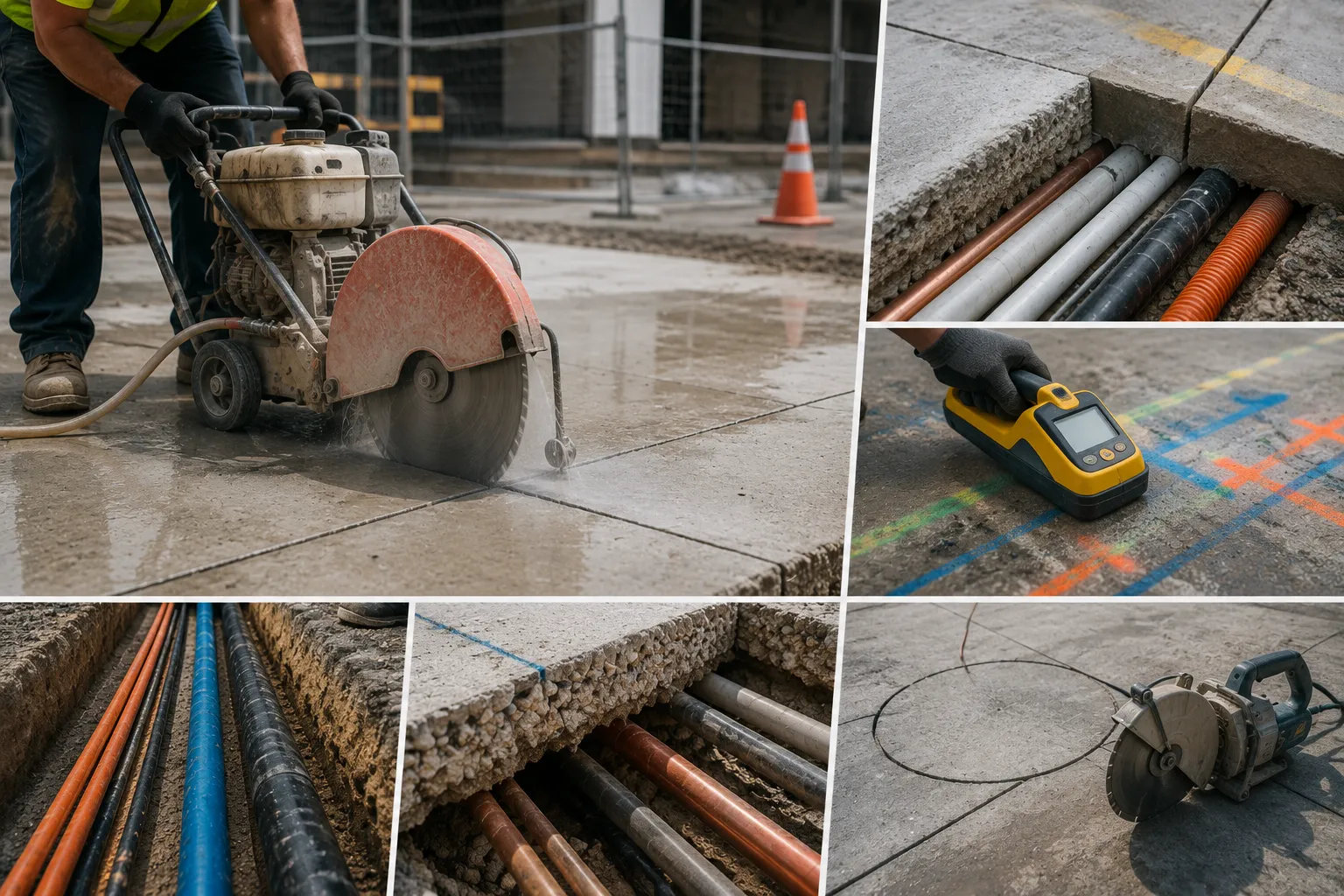
Concrete cutting requires meticulous site preparation and attention to detail. Many concrete slabs, driveways, and walls conceal hidden utility services, such as electrical conduits, water pipes, and gas lines, which are potential hazards that can have serious, long-term repercussions on your commercial project in Australia.
As a reputable provider of Brisbane core drilling services for nearly 25 years, we always encourage our clients to take proactive and practical steps to prevent costly delays and ensure seamless project timelines.
Key Takeaways
- Identifying live services is essential before concrete cutting to prevent damage to electrical cables, gas lines, water pipes, and communications infrastructure.
- Concrete scanning and service locating should come first, helping contractors identify hidden utilities and determine safe cutting locations.
- Detailed planning reduces project risks, allowing cutting methods, equipment, and safety procedures to be selected according to the site conditions.
- Safety procedures are critical when working near live services, requiring appropriate equipment, trained operators, protective measures, and careful cutting techniques.
- Professional concrete cutters help prevent costly incidents, reducing the risk of service damage, project delays, injuries, and expensive repairs.
This blog explains the basics of cutting concrete around live services, helping you make smart, calculated decisions for your project and enjoy the best long-term outcomes.
Live Services as Applicable to Concrete Cutting
A live service is a utility or infrastructure that runs through, beneath, or within a building or concrete structure. These services include:
- Electrical cables.
- Gas lines.
- Water pipes.
- Telecommunication conduits.
- Drainage systems.
- Fire protection systems.
Identifying live services is a critical aspect of concrete cutting or drilling tasks. Accidentally striking a live cable or gas line can create serious safety hazards, damage infrastructure, and lead to costly rework, project delays, and disruption to building occupants. It is also a key step when preparing a site for renovation.
It’s important to remember that these risks become significantly greater for older commercial properties, where existing service locations may not match the original building plans. Renovations, alterations, and repairs done over the years often coincide with cable rerouting and pipe reinstallations. These changes mean that contractors cannot rely exclusively on historical drawings to determine the property’s current live services.
Trusted providers of Brisbane road sawing services understand these nuances and implement the appropriate service detection and site assessment protocols. These proactive measures allow them to cut concrete safely, prevent costly damage and delays, and deliver long-term peace of mind.
The Significance of Live Services in Concrete Cutting
Striking underground utilities and live services within concrete structures is a common occurrence in Australia. The country records an average of 15,000 utility strikes annually, with telecommunications, water, and gas services accounting for the majority of incidents, per Before You Dig Australia’s (BZDA) 2024 national economic assessment.
The study also estimates the yearly cost of these incidents at $4.6 billion, including repair expenses, service outages, delays, and safety interventions. Whether you’re starting an office renovation, retail fit-out, industrial facility upgrade, warehouse modification, or commercial plumbing project, leaving live services intact before concrete cutting can prevent operational disruptions, emergency callouts, and other severe repercussions.
The Significance of Choosing the Proper Concrete Cutting Technique
The selected concrete cutting technique can impact the level of risk when working around live services. We recommend careful planning to prevent damaging hidden cables, pipes, or other infrastructure and ensure smooth project timelines.
When creating new openings in structural or masonry walls, concrete cutters must determine the concealed live services, such as electrical conduits, plumbing, water pipes, and communication cables. Highly experienced contractors use innovative ground-penetrating radar (GPR) technology to detect these potential obstructions and allow them to cut through concrete slabs and structures.
Concrete slabs can be challenging to cut, especially with hidden live services. GPR technology and other preventive measures are critical on older commercial properties, where existing conditions may differ significantly from the original plans.
When working on driveways, footpaths, and access areas outdoors, contractors must detect possible underground water, gas, and telecommunications lines. They can implement efficient concrete cutting techniques once they identify these concealed utilities and achieve their project objectives.
What to Expect From Reputable Concrete Cutting Companies
Trusted concrete cutting companies understand the importance of detecting live services to prevent costly damage, protect staff and building occupants, avoid lengthy service disruptions, and ensure the best possible outcomes.
As a highly experienced concrete cutting company with nearly 25 years of industry experience, we review available drawings, service plans, and other site documentation to determine the precise locations of electrical, plumbing, gas, telecommunications, and other infrastructure lines.
In our experience as concrete cutting specialists, we understand that these renderings may not tell the entire story. For this reason, we use innovative ground-penetrating radar (GPR) and cable and pipe locators to determine the actual live service conditions at the work site. Next, we mark out the appropriate cutting zones and determine the best position, equipment, and technique to cut concrete safely and efficiently.
If the concrete cutting company discovers an obstruction, they will modify the cutting position or technique to work around it. Alternatively, they can postpone the project and resume at a later date, depending on the risks involved. A reputable contractor knows when to pause the work and inform the relevant parties rather than making premature assumptions. Pushing ahead regardless is one of the most costly concrete cutting mistakes. Before investing in concrete cutting services, we encourage you to ask your candidates the right questions about service verification, detection equipment, insurance coverage, and their track record involving commercial projects. Trusted service providers explain their processes clearly and prioritise service detection and risk management, drastically minimising safety risks, structural damage, costly rework, and lengthy disruptions. It is also worth confirming which permits and approvals your project requires.
Frequently Asked Questions (FAQs)
How do concrete cutting companies detect live services?
Reputable contractors use ground-penetrating radar (GPR) or electromagnetic locators, structural plans, and service drawings to detect concealed live services before concrete cutting work begins.
What are the potential consequences of accidental utility strikes?
Contractors will stop work immediately, implement safety measures, and notify the utility or building owner. Depending on the utility service, consequences may include emergency response, repair costs, and lengthy delays.
Can concrete cutting services proceed despite outdated service plans?
Although concrete cutting can begin even with outdated service plans, they are not the only hurdle contractors face. They must also scan and verify the structure thoroughly before cutting, especially in older buildings where the service lines may not match the original documentation.
Are some concrete cutting techniques more suitable for live services?
Conventional methods, such as jackhammering and traditional demolition, may lead to adjacent structural damage. On the other hand, modern wall and core drilling techniques create precise openings that significantly lower this risk.
Who is accountable for live service damage during a renovation?
Responsibility usually depends on whether the appropriate safety measures were implemented before concrete cutting began. For this reason, we recommend considering only contractors who follow strict safety procedures and provide adequate insurance coverage for long-term peace of mind.
Conclusion
Concrete cutting around live services requires meticulous planning, accurate service detection, and professional execution. Identifying potential obstructions and implementing the appropriate cutting techniques allows contractors to significantly minimise safety risks, prevent costly rework, and maintain smooth project timelines.
Take that first step in a safe, hassle-free concrete cutting project with Cutrite. Since 2003, our concrete cutting services have included innovative live service detection technology that ensures optimal, long-term outcomes. Book an appointment today to discuss your project and experience the Cutrite difference.