

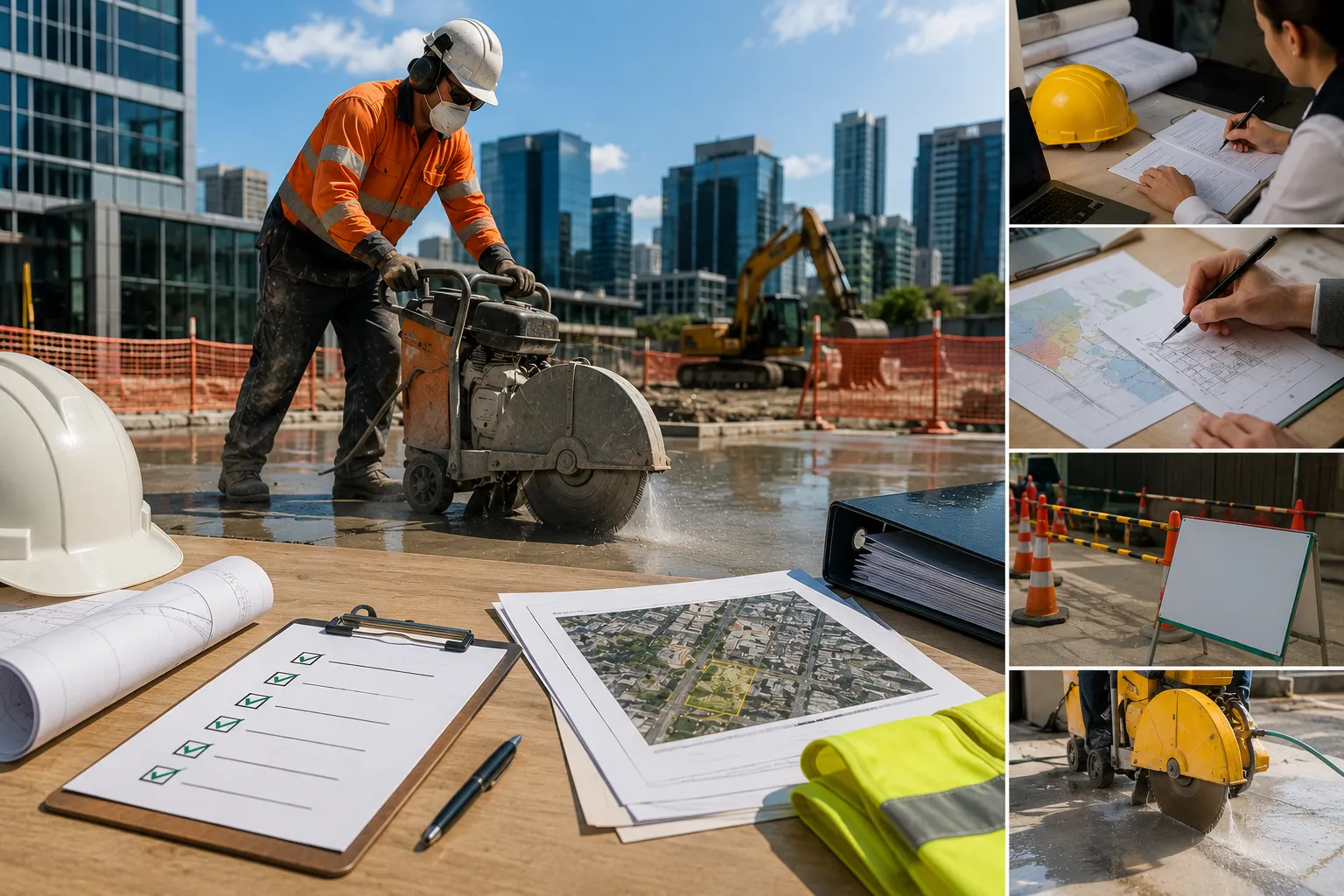
Concrete cutting tasks for commercial projects in Australia may seem simple. However, various concealments, including electrical conduits, gas lines, water pipes, embedded steel, data cables, and underfloor heating, can be hidden beneath or within concrete. Failure to identify these potential hazards can lead to costly property damage, service disruptions, structural issues, and long-term safety risks. For these reasons, securing the necessary permits and approvals ensures compliance with state and local safety regulations.
Whether working on a road renovation, building extension, office refurbishment, or a new service installation, understanding the permit and approval process can prevent costly delays and rework, ensuring a smooth project timeline. As a trusted provider of Brisbane core drilling services since 2003, we provide valuable insights to help you achieve these objectives.
Key Takeaways
- Permits and approvals are essential for commercial concrete cutting to meet Australian safety, building, utility, and local council requirements while preventing delays, penalties, and costly rework.
- Underground services must be identified before cutting, including electrical conduits, gas lines, water pipes, data cables, and reinforcing steel, using concrete scanning and GPR technology.
- Council approval may be required for work involving public roads, footpaths, structural elements, or load-bearing walls, with requirements varying according to location and project scope.
- Work health and safety requirements are critical, including silica-dust controls, appropriate PPE, safe work method statements, and qualified, insured contractors.
- Traffic management and site coordination are important for projects affecting public areas or confined spaces, helping minimise disruption and keep commercial projects compliant and on schedule.
This blog explains the basics of permits and approvals for commercial concrete projects in Australia, helping you make informed decisions and gain long-term peace of mind.
Why Permits and Approvals Matter
Concrete cutting involves critical work health and safety compliance, building regulations, utility infrastructure, and local council requirements. Depending on the project’s location, scope, and potential impact, approvals and permits may be required before work begins. These requirements help prevent long-term structural damage, improve project safety, and minimise disruptions to adjacent neighbourhoods and infrastructure.
Failure to secure the necessary approvals and permits may lead to work stoppages, penalties, project delays, additional expenses, and costly rework. Unfortunately, these issues can negatively impact the schedules and budgets of commercial projects in Australia.
As a reputable provider of Brisbane road sawing services, we help our clients identify the approvals and safety measures relevant to their project requirements. We always encourage them to understand these prerequisites to ensure a seamless concrete-cutting project and gain peace of mind.
Identifying Underground Concealments: The Critical First Step
Concrete cutting is not a haphazard endeavour. Slicing concrete slabs without identifying concealed rebar, electrical wiring, water pipes, data cables, and underfloor heating, and neglecting critical concrete scanning techniques, can lead to disastrous outcomes.
Taking proactive measures, such as identifying basic underground services hidden beneath concrete structures, can facilitate smooth project timelines while reducing the risk of costly damage and rework, unexpected delays, service disruptions, and workplace accidents. Our guide to cutting concrete around live services covers this process in detail.
Unfortunately, striking underground utilities is common in Australia. More than 15,000 utility strikes lead to an estimated $4.6 billion in delay-related costs, service disruptions, and significantly reduced work output annually, per Before You Dig Australia (via ESD News). Investing in highly experienced concrete cutting services that use innovative concrete scanning and ground penetrating radar (GPR) technology can prevent these scenarios and deliver a high return on investment.
Council Approvals for Structural and Road Cutting
Concrete cutting projects involving public roads, footpaths, or structural elements often require council approvals and regulatory clearances. For instance, Brisbane road sawing projects involve cutting public infrastructure that requires permits for traffic control, pedestrian safety, worksite management, and the relevant surface restoration.
Thoughtful, meticulous planning is critical to the success of many structural concrete cutting projects in Australia. For instance, creating a new doorway or opening often requires building approval, qualified building certifier assessment, and the relevant engineering site checks and approvals. Brisbane drilling projects also require similar considerations, particularly those involving structural or load-bearing walls.
The specific approvals depend on the location, nature, and scope of the project. If you’re starting a commercial project in Australia, we strongly recommend confirming the relevant requirements with your local council, certifier, engineer, and contractor before work begins.
Work, Health, and Safety Requirements
Concrete cutting generates harmful silica dust, which can compromise long-term respiratory function. Safe Work Australia limits silica exposure to 0.05 milligrams per cubic metre for every eight-hour work shift. This restriction has been enforced by the relevant state and territory authorities since July 2020.
Whether working on a commercial building fit-out, a retail refurbishment, a warehouse upgrade, bridge demolition, or a railway project, securing the safe work method statement for dust suppression, wearing the appropriate Personal Protective Equipment (PPE) and hiring a licensed contractor who offers adequate insurance coverage ensure smooth project timelines, a safe work environment, and optimal long-term outcomes.
Traffic Management and Public Safety Requirements
Concrete cutting projects that affect public roads, pedestrian areas, and other shared spaces may require an approved traffic management plan. Depending on the location and local authorities, the plan may include temporary signage, lane closures, pedestrian diversions, contingency traffic measures, work zones, and the approved working hours.
If you’re starting a Brisbane road sawing project, we encourage you to consider these factors during the planning stage because they often take longer to implement than the actual work. Taking proactive steps and allowing sufficient time prevents lengthy delays and disruptions, enabling you to enjoy seamless project timelines. These approvals are also a key factor in the cost of commercial concrete cutting.
Core Drilling and Confined Work Areas
Core drilling sometimes requires working in confined spaces, such as restricted plant rooms, service areas, or multi-storey buildings. Working in these restricted commercial spaces often requires permission from the relevant authorities.
Contractors working on core drilling projects must coordinate with building owners, facility managers, or site supervisors to obtain the required permits and approvals. They must manage several factors, including dust, noise, vibration, access restrictions, and working hours, to minimise disruption to customers, employees, and building occupants while meeting tight project deadlines.
Frequently Asked Questions (FAQs)
Does cutting internal concrete walls require council approval?
Cutting load-bearing walls often requires approval from a building certifier and structural engineer to ensure the work doesn’t compromise long-term structural integrity.
What’s the usual timeline for obtaining a permit for road sawing projects?
Depending on your local council requirements, traffic management approval usually takes one to three weeks. We recommend applying for the necessary permits and approvals several weeks before your project starts to prevent lengthy delays and facilitate smoother timelines.
Who should identify underground services before cutting concrete?
A concrete cutting contractor with the necessary concrete scanning and ground-penetrating radar (GPR) equipment is responsible for identifying underground services, such as rebar, electrical conduits, gas lines, and data cables, to prevent service disruptions, property damage, and long-term safety issues.
What are the potential consequences of concrete cutting without the necessary permits?
Unfortunately, concrete cutting without the required permits and approvals may lead to work stoppages, fines, and costly rework. For these reasons, we strongly recommend consulting your contractor on obtaining the required permits to ensure smooth project timelines.
Is a safe work method statement necessary for small commercial projects?
Since concrete cutting is classified as high-risk construction work under Australian WHS regulations, even small commercial projects require a safe work method statement.
Conclusion
Commercial concrete cutting requires identifying concealed services, securing the required permits and approvals, complying with stringent WHS requirements, and implementing the appropriate traffic and public safety measures. These strategies help prevent costly delays, property damage, and workplace accidents. Addressing these concerns with a reputable contractor from your area helps keep your project compliant, efficient, and on schedule.
Take the first step in your concrete cutting project with Cutrite. Since 2003, we have helped our clients in Australia secure the necessary permits and approvals, ensuring seamless project timelines and optimal long-term outcomes for their commercial projects.Book an appointment today to discuss your requirements and experience our innovative concrete cutting solutions.