

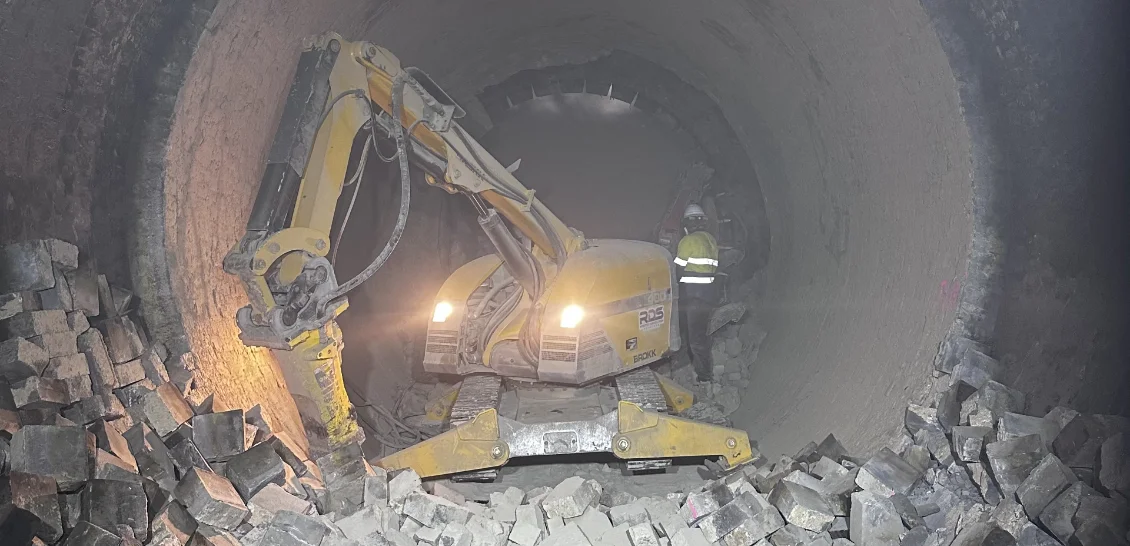
The Australian construction and demolition sector has been associated with manual labour, including the use of conventional tools and strenuous, backbreaking work. However, the advancement of demolition robots has recently created a significant paradigm shift in these industries.
Does your project require demolition, but you don’t know where to begin? As Brisbane robot demolition experts who have facilitated numerous residential, commercial, and industrial projects nationwide since 2003, we’re here to help.
This blog will explain the basics of robotic demolition and how it compares to traditional methods, empowering clients to make informed, long-term decisions and enjoy hassle-free projects.
Key Takeaways
- The rise of AI and robotics in construction introduces automated remote‑controlled machines that transform how demolition projects are executed compared to manual labour and traditional methods.
- Robotic methods significantly enhance safety by allowing operators to work remotely, reducing exposure to hazardous conditions and falling debris.Robotic demolition improves efficiency and productivity, often shortening project timelines and reducing reliance on manual labour.Modern robotic demolition technology is highly versatile, capable of handling various materials and demolition tasks with different attachments.Robotic systems offer environmental advantages, such as lower dust, noise, and vibration compared to traditional demolition methods.
Robotic Demolition: Revolutionising Safety
The efficiency of demolition robots gives them a significant advantage over their conventional counterparts. These machines can demolish various structures without tiring, facilitating more complex project timelines.
Automated demolition units can also operate in hazardous and inaccessible environments, including confined spaces or areas with toxic substances. Examples of the latter include the following:
- Asbestos-contaminated structures
- Chemical spill sites
- Radioactive zones
- Fire-damaged and mould-infested buildings
- Biohazard zones
Cost-Effectiveness and Sustainability
Don’t let the costs of robotic demolition intimidate you. While the initial payouts for these innovative demolition solutions are higher than traditional methods, you will gain significant long-term cost savings. Demolition robots don’t require labour costs and deliver faster project turnaround times than human workers.
Project managers don’t need to worry about major repairs, repeating work processes, and waste generation when using cutting-edge demolition technology. Demolition robots are a cost-effective and economical strategy that leaves minimal carbon footprints and provides clients with excellent value for money.
Unfortunately, many projects operate without considering their environmental impact. They pollute the air, contaminate water, generate considerable waste, and leave high carbon footprints, putting their immediate vicinity and the larger community at risk. You can relax knowing that robotic demolition’s accurate, calibrated operation significantly reduces dust and pollutants, preserving the environment and the health and well-being of workers.
Utilising Modern Robotic Demolition Technology
The primary considerations in efficient demolition are power and efficiency. Demolition robots excel in these facets because their power allows them to destroy resilient materials with uncanny precision, including reinforced concrete, natural stone, masonry, structured steel, pressure-treated wood, composite panels, and ceramic tiles. Regardless of the structure’s makeup, these machines facilitate project timelines and exceed client expectations.
Although conventional tools and human labour can demolish various buildings, their robotic counterparts can deliver consistent results in challenging settings. Demolition robots combine power, accuracy, and precision to produce these impressive outcomes.
Robotic Demolition Portability Benefits
Unlike conventional demolition tools which require considerable setup times that can be burdensome, their robotic counterparts provide project managers with convenient preparation and portability, especially in desolate or confined sites.
Manufacturers prioritise convenience and mobility when creating demolition robots. They ensure these machines are manoeuvrable and compact, allowing technicians to haul and set them up easily on any project site. Robotic demolition’s ability to navigate cramped areas and uneven terrain makes it a tremendous asset in complex demolition environments, which are challenging for conventional methods.
Robotic Demolition Advantages
Robotic demolition offers clients numerous advantages over traditional methods, including the following:
Enhanced safety
By eliminating manual labour, demolition robots significantly strengthen workplace safety. Human workers are prone to accidents and mishaps in challenging project surroundings. Technicians can operate demolition robots remotely, thereby avoiding the risk of falling debris and other potential hazards and providing a reassuring level of safety.
Accuracy
Construction industry experts laud demolition robots for their uncanny precision. Operators can program these machines to demolish buildings without compromising adjacent structures integral to new residential, commercial, or industrial projects.
Enhanced efficiency
Demolition robots enable the faster dismantling of various structures. Since these machines are compact, they can access cramped, challenging spaces, eliminating manual labour, facilitating complicated timelines, and instilling a sense of confidence and speed and quality of your projects.
Easy operation
Cutting-edge demolition robots are user-friendly and easy to operate. These features help project managers save time and enhance efficiency.
Versatility
Manufacturers equip demolition robots with attachments and tools that enable them to perform a wide range of demolition tasks. These machines can demolish concrete, slice steel, pulverise and remove materials, and clear debris in various settings, providing clients with a cost-effective strategy for their projects in less time.
Regardless of your unique project requirements, the tools and versatility of demolition robots can exceed your expectations and empower you with the confidence to handle a wide range of challenging tasks.
Environmental advantages
Conventional manual demolition strategies generate significant dust, noise, and debris, which harm the environment and surrounding areas.
On the other hand, robotic demolition produces minimal noise and vibration, thereby enhancing project convenience. Manufacturers also equip them with dust suppression systems to minimise a negative environmental impact and protect workers’ health and well-being.
Shaping the Future of Robotic Demolition
Shifting from traditional to state-of-the-art robotic demolition provides clients and project managers with a safe, efficient, and sustainable strategy that delivers guaranteed results. Demolition robots are a fixture in the Australian construction industry and with good reason.
These innovations have helped construction professionals demolish and rebuild numerous residential, commercial, and industrial structures, paving the way for modernisation and economic growth. You can expect this trend to continue for the foreseeable future.
FAQs
What is robotic demolition?
Robotic demolition uses remote-controlled machines to demolish, dismantle, crush, shear, and remove parts of a structure. Instead of placing workers directly beside unstable concrete, falling debris, toxic materials, or confined spaces, technicians operate the robot from a safer distance. These machines are compact enough for tight areas yet powerful enough to break concrete, cut steel, and handle demanding demolition work. Robotic demolition is often used in hazardous or hard-to-access environments, including tunnels, high-rise sites, fire-damaged buildings, asbestos-contaminated areas, and industrial spaces where safety, accuracy, and reduced disruption matter.
What are the benefits of robots for demolition?
Robots offer safer, faster, and more controlled demolition compared with many traditional methods. Since operators can work remotely, they have less exposure to falling debris, unstable structures, dust, fumes, and dangerous materials. Demolition robots can also work in confined or uneven areas where larger machinery may struggle. Their precision helps protect nearby structures during selective demolition, while their attachments allow them to break concrete, cut steel, pulverise materials, and clear debris. They also create less noise, dust, and vibration than many manual methods, making them useful for sensitive sites.
Are robots faster at demolition in construction?
Robots can be faster for many demolition tasks, especially large-scale, repetitive, or physically demanding work. Their hydraulic systems allow them to keep working for long periods without fatigue, which helps shorten project timelines and reduce reliance on manual labour. While a human worker may complete small and simple tasks quickly, robotic demolition becomes more efficient when the work involves heavy concrete, confined access, hazardous conditions, or repeated breaking and removal. In some cases, one demolition robot can replace several labourers and complete tasks much faster than manual jackhammering.
Is robotic demolition safe?
Robotic demolition is generally safer than traditional demolition because it keeps workers farther away from the most dangerous parts of the job. Operators can control the machine remotely, reducing their exposure to falling debris, weak structures, toxic substances, dust, and unstable work areas. Robots can also take on high-risk tasks in confined spaces, contaminated buildings, fire-damaged structures, and areas where manual demolition would place workers under unnecessary strain. While safety procedures and trained operators are still required, robotic demolition can reduce accidents, fatigue, and long-term health risks on site.
What are the disadvantages of robots in demolition?
Robotic demolition has some drawbacks, including high upfront costs, rental expenses, maintenance requirements, and the need for trained operators. These machines are advanced, so businesses may need to invest in specialist training, repairs, and ongoing support. There may also be limited access to qualified technicians, which can create scheduling or staffing challenges. Robots are powerful and precise, but they still rely on human judgement, programming, and site direction. They cannot make the same spontaneous decisions as an experienced worker, so proper planning and skilled supervision remain important.
Conclusion
Since 2003, Cutrite has provided efficient robotic demolition and Brisbane wire sawing solutions to numerous clients in Southeast Queensland. Our state-of-the-art Brokk and Husqvarna robots, which are known for their specialised demolition, remote operation, and enhanced safety features, can handle a wide range of materials and streamline various projects for your peace of mind and comfort.
Please contact us today to discuss your robotic demolition requirements. Our staff members can create a customised, upfront quotation, schedule an on-site inspection, and provide personalised solutions that deliver guaranteed results.