

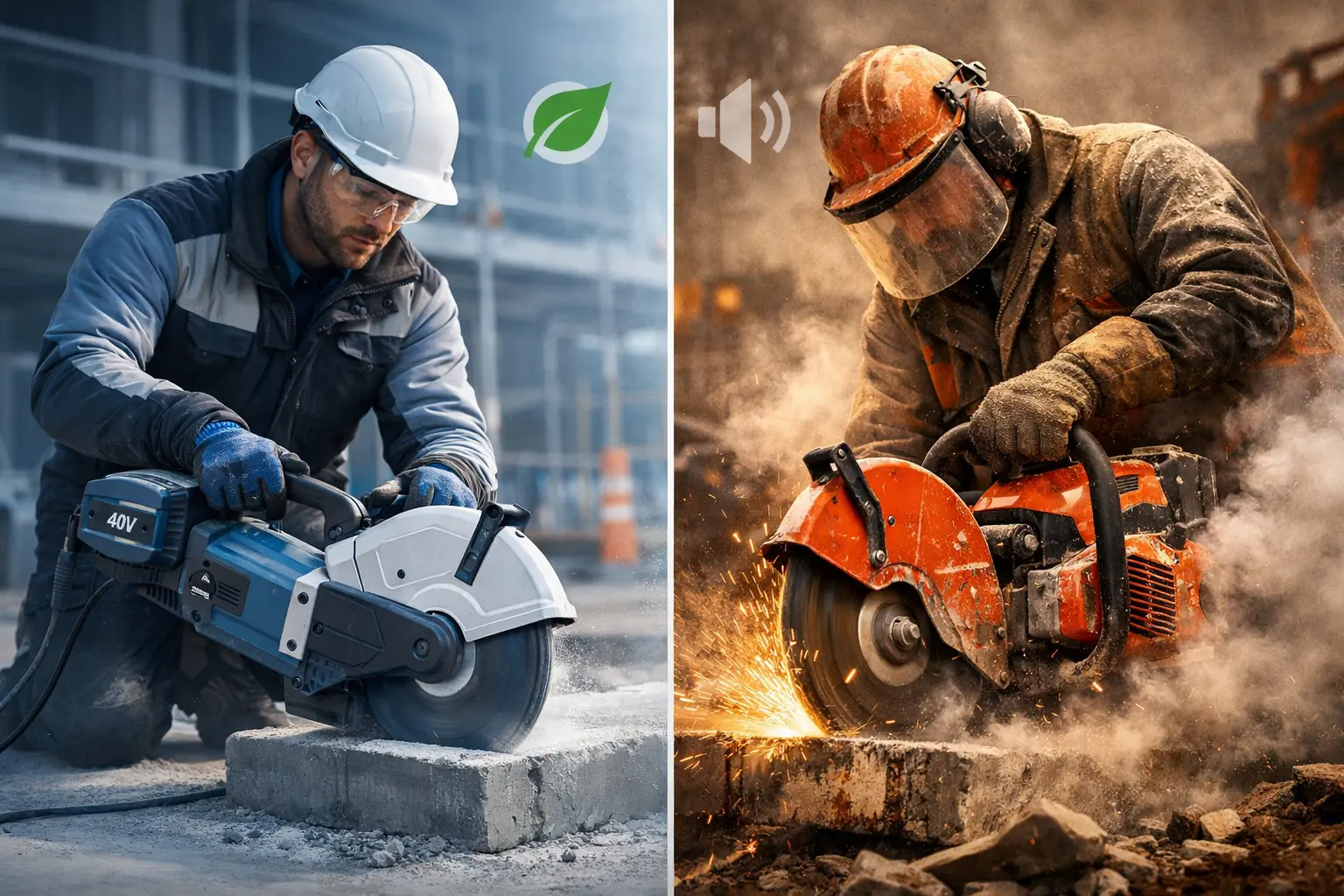
Concrete saws are critical to the success of your construction project. Whether demolishing, building, or renovating an existing residential or commercial structure, the power and accuracy of these innovative tools can significantly improve project timelines and outcomes.
Choosing the right type of concrete saw can help you achieve these goals and ensure optimal results. As a trusted Brisbane hand and ring sawing expert serving various clients in Australia since 2003, our knowledge of industry best practices allows you to choose between electric or petrol concrete saws.
Key Takeaways
- Power source & performance: Petrol saws deliver greater cutting power and depth, making them ideal for heavy-duty outdoor jobs, while electric saws provide consistent performance for lighter or precision work.
- Indoor vs. outdoor use: Electric concrete saws produce no exhaust fumes, making them suitable for indoor or enclosed spaces, whereas petrol saws emit fumes and are best used outdoors.
- Weight & ease of use: Electric models are generally lighter, easier to start, and simpler to handle, while petrol saws are heavier and require more effort to operate.
- Maintenance & convenience: Electric saws require less maintenance and no fuel storage, whereas petrol saws need regular refuelling and engine upkeep.
- Mobility & flexibility: Petrol saws offer better portability for remote sites without power access, while electric saws depend on a power source or generator.
This blog examines the advantages and disadvantages of electric and petrol concrete saws, allowing you to make informed decisions for your project and providing long-term peace of mind.
What Are Electric Concrete Saws?
As the term suggests, electric concrete saws are powerful, handheld or walk-behind cutting tools powered by electric motors that can slice through concrete, brick, stone, and tile using sharp diamond-edged blades. These tools are ideal for indoor settings or confined spaces because they do not produce exhaust fumes. Electric concrete saws are also usually lighter than their petrol counterparts, drastically minimising dust emissions and improving safety requirements.
The common applications for electric concrete saws include:
- Indoor remodelling, such as removing concrete slabs or steps.
- Slicing concrete blocks, paver stones, and brick.
- Interior renovation projects, such as installing new doors or windows.
- Projects requiring quiet operation and fine control, such as schools, hospitals, or basements.
Whether using electric concrete saws for DIY projects or large-scale construction, these cutting-edge tools deliver precision, efficiency, and reduced physical strain compared to conventional concrete cutting techniques.
Their consistent power output creates accurate cuts with minimal fumes and material waste. Developments in blade technology and dust suppression systems have significantly improved safety and environmental compliance. For these reasons, DIY users and professional technicians can achieve professional-grade results while improving site safety across a wide range of applications.
Pros of Electric Concrete Saws
The pros of electric concrete saws include:
- Zero emissions: Since these saws run on electricity, they do not produce toxic exhaust fumes, enhancing user and environmental safety.
- Quiet operation: Electric concrete saws are typically 10-20 dB quieter than their petrol-powered counterparts. This feature reduces noise pollution in residential or noise-sensitive settings, such as hospitals, churches, and schools.
- Low-maintenance: Electric concrete saws don’t require fuel mixing, spark plugs, or engine servicing, saving time and lowering long-term operational costs.
- Ease of use: Operators only need to plug the machine in and activate the switch, making it ideal for DIY users or beginners.
- Consistent power output: Electric concrete saws provide consistent torque and revolutions per minute (RPM), drastically reducing vibrations and delivering precise, smooth cuts.
- Lightweight: Electric-powered saws are usually lighter than their petrol counterparts, reducing user strain and facilitating easier handling.
- Clean work environment: Electric concrete saws produce minimal emissions, complement dust control systems, improve work site safety, and leave minimal debris.
- Compact: Electric concrete saws’ simple designs, particularly the handheld version, facilitate easier transport and portability.
Cons of Electric Concrete Saws
The cons of electric concrete saws include:
- Limited power: The limited torque and horsepower of electric concrete saws make them inappropriate for heavy-duty construction projects involving thick slabs or reinforced concrete.
- Power source dependence: These tools require a nearby outlet or generator, limiting the coverage area and reducing overall efficiency.
- Limited mobility: The dependence of electric concrete saws on a power source makes them inappropriate for large construction sites and remote settings without electricity.
- Unsuitable for wet outdoor environments: Electric tools may become a shock risk when handled by inexperienced operators in wet climates or environments.
- Prone to overheating: Electric concrete saws can overheat under prolonged, continuous use.
What Are Petrol Concrete Saws?
Petrol or gas-powered concrete saws are heavy-duty power tools equipped with two-stroke gasoline engines that can cut concrete, rebar, asphalt, and stone. Their high power output and mobility make them ideal for demanding, large-scale construction projects. Whether demolishing an existing structure, cutting masonry, or slicing holes through tough concrete slabs, petrol concrete saws deliver impressive, long-term results.
The common applications of petrol concrete saws include:
- Cutting expansion joints in concrete slabs.
- Slicing through concrete-encased steel pipes and rebar.
- Demolition of concrete walls or pavements.
- Large-scale infrastructure projects, including highway, bridge, tunnel, airport runway, and water/railway construction.
Pros of Petrol Concrete Saws
The pros of petrol concrete saws include:
- High cutting power: The high power output and torque of petrol concrete saws enable them to cut thick, reinforced concrete, rebar-heavy slabs, bridge decks, runway pavements, and other heavy-duty infrastructure.
- Durability: Modern petrol concrete saws can endure harsh climates and environments. They’re also often used in large-scale wet-cutting applications to prevent electrical hazards, improve cutting accuracy, and prevent overheating.
- Full mobility: Since petrol concrete saws don’t rely on outlets or cords, their full mobility allows them to operate in expansive project sites, tunnels, remote settings, and rural infrastructure areas.
- Long operating times: Unlike electric concrete saws, which can overheat with prolonged use, the petrol version runs longer, supporting large cutting volumes and extended shifts. Since the latter also doesn’t require downtime for charging or battery swaps, it ensures continuous operation with minimal downtime or delays.
- Compatibility with larger blades: Petrol concrete saws can accommodate large diamond blades, especially in walk-behind versions, to cut deeper into tougher applications, such as road slabs and foundations.
- Manoeuvrability: Since petrol concrete saws have no movement-restricting wires or cables, users can operate them without fear of tripping or getting injured.
Cons of Petrol Concrete Saws
The cons of petrol concrete saws include:
- Noise pollution and vibration: Unlike electric concrete saws that are ideal for noise-sensitive settings, petrol concrete saws are significantly louder, increasing the likelihood of operator fatigue and making hearing protection critical.
Long-term use can cause operator strain; that’s why it’s important to use anti-vibration equipment, use the proper technique, and take frequent breaks.
- Dust emissions: Gas-powered concrete saws produce dust emissions from high-abrasive cutting. If you’re using a petrol concrete saw, consider using wet-cutting techniques, dust suppression attachments, and respiratory protection to protect your health and well-being.
- High-maintenance: Petrol concrete saws require constant refuelling, fuel mixing, internal part maintenance, and engine servicing. They also require more downtime than electric concrete saws. Our concrete saw maintenance guide covers the essentials.
- Weight: The heavy weight of petrol concrete saws can cause user fatigue during challenging infrastructure projects.
FAQs
What is the difference between electric and petrol concrete saws?
Electric concrete saws run on an electric motor, while petrol concrete saws use a two-stroke gasoline engine. Electric saws are usually lighter, quieter, easier to start, and better suited to indoor or enclosed areas because they do not produce exhaust fumes. Petrol saws are more powerful and better suited to heavy-duty outdoor projects, remote sites, and large-scale cutting. They can cut deeper, run longer, and handle tougher materials such as reinforced concrete, rebar-heavy slabs, asphalt, and stone, but they are louder, heavier, and require more maintenance.
When should you use an electric concrete saw?
An electric concrete saw is usually best for indoor work, confined spaces, precision cutting, and noise-sensitive areas such as schools, hospitals, churches, basements, and residential settings. It can be used for removing concrete slabs or steps, cutting concrete blocks, trimming pavers or bricks, and creating openings during interior renovations. Electric saws do not emit exhaust fumes, making them safer for enclosed areas when used with proper dust control. They are also lighter and easier to handle, which can reduce operator strain during smaller or more detailed cutting tasks.
When is a petrol concrete saw the better option?
A petrol concrete saw is the better option for outdoor, remote, large-scale, or heavy-duty concrete cutting. It offers strong cutting power, high torque, longer operation times, and full mobility because it does not rely on cords, outlets, or generators. Petrol saws are suitable for cutting thick slabs, reinforced concrete, rebar, asphalt, bridge decks, road slabs, foundations, pavements, tunnels, runways, and other infrastructure work. They can also support larger blades for deeper cuts. However, they produce fumes, dust, noise, and vibration, so they need proper ventilation, PPE, and dust control.
What are the disadvantages of electric concrete saws?
Electric concrete saws have limited power compared with petrol models, so they may not suit heavy-duty cutting, thick slabs, or reinforced concrete. They also need access to an outlet or generator, which can restrict movement on larger sites or remote projects. Because they rely on electricity, they may create shock risks in wet outdoor conditions if handled incorrectly. Electric saws can also overheat during long, continuous use, especially under demanding cutting conditions. While they are useful for indoor and precision work, their limits make them less suitable for large-scale infrastructure or tough outdoor applications.
What are the disadvantages of petrol concrete saws?
Petrol concrete saws can be loud, heavy, high-maintenance, and physically demanding to operate. They produce exhaust fumes, dust, vibration, and noise, which makes them less suitable for indoor or poorly ventilated spaces. Operators need hearing protection, respiratory protection, dust suppression, proper handling techniques, and regular breaks to reduce fatigue and vibration exposure. Petrol saws also require fuel mixing, refuelling, engine servicing, and maintenance of internal parts. While they are powerful and mobile, these drawbacks make them better suited to outdoor, heavy-duty work rather than smaller indoor projects.
Conclusion
Electric and petrol concrete saws play a critical role in many residential and commercial construction projects in Australia. However, the right choice depends on the demands of your project.
Electric concrete saws’ clean and quiet operation, ease of use, and low-maintenance features make them suitable for many indoor, noise-sensitive, and precision-based projects. On the other hand, petrol concrete saws have the impressive power, mobility, and endurance required for challenging large-scale infrastructure projects.
Understanding the strengths and limitations of each concrete saw type enables you to make an informed decision for optimal safety, efficiency, and long-term project outcomes. An experienced Brisbane floor sawing contractor can help you make the right decision and enjoy peace of mind. You can trust Cutrite to exceed your expectations. Since 2003, we have provided numerous clients in Australia with cost-effective Brisbane core drilling services that guarantee long-term results. Book an appointment today to receive a personalised quotation, arrange an on-site inspection, and discover our transformative construction project solutions.