

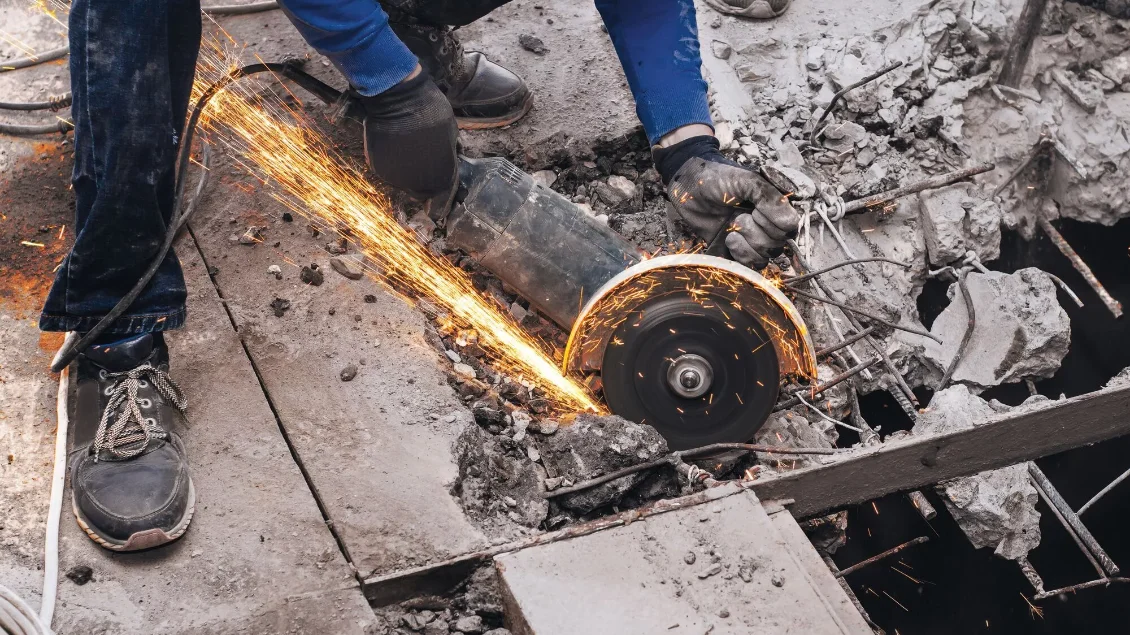
Many residential, commercial, and industrial projects require cutting concrete with rebar (reinforced steel used in concrete construction), a material known for its durability and strength. This situation can present challenges to project managers and contractors. However, with the right knowledge and tools, they can overcome these obstacles.
If you’re facing a project that involves slicing concrete with rebar, there’s no need to worry. As a trusted provider of Brisbane wall sawing services since 2003, we’ve got you covered. Using the right tools (such as a diamond saw blade) and techniques is critical to your project’s success and your long-term peace of mind.
Key Takeaways
- Cutting concrete that contains steel reinforcement presents challenges due to steel’s strength and density.
- Diamond saw blades are suitable for cutting both concrete and internal steel reinforcement, offering greater durability and precision.
- Proper tool setup and safety measures are essential to prevent accidents and overheating.
- Following a safe cutting technique—such as marking cut lines, steady blade angle, and controlled pressure—ensures accurate and clean cuts.
- After cutting, appropriate clean‑up and equipment care help maintain blade performance and site safety.
This blog will explore the best way to cut rebar in concrete, empowering you with timely knowledge and ensuring a seamless, hassle-free project.
What Materials Make Up Rebar?
Rebar (reinforced or reinforcing bar) is usually made of steel. Manufacturers embed it in concrete to enhance tensile strength. The absence of rebar drastically compromises concrete’s structural integrity, causing it to crack under tension.
Steel’s high melting point and density require careful tool selection to prevent equipment from melting when it comes into contact with the rebar. Using premium, cutting-edge tools and the proper techniques prevents accidents, costly project delays, and ensures you meet your deadlines.
Can A Concrete Saw Cut Through Rebar?
A concrete saw can cut through rebar. However, choosing the appropriate saw is critical to your project’s success.
Standard diamond blades can slice concrete, masonry, tile, and stone. Unfortunately, they slow down and may overheat when they hit a rebar. For these reasons, a diamond saw blade is the better option, which ensures a greater chance of success and peace of mind.
A diamond saw blade is a circular steel disc that can slice concrete, asphalt, and stone. A saw blade’s tip can be smooth, textured, continuous, or segmented, depending on your project requirements. Its core is an engineered steel disc with slots known as “gullets,” which allow water or air to pass between the segments, enhancing cooling, and preventing overheating. Gullets will also enable the blade to flex under tension, drastically lowering the likelihood of warping and project failure.
Manufacturers create factory-tensioned cores to ensure precise cuts at high speeds, allow the blade to flex slightly under tension, and revert to its original shape.
The resilient blade types and techniques of diamond saw blades are critical considerations when cutting through robust concrete rebar.
What Are The Advantages of Diamond Saw Blades?
Diamond saw blades can be a game-changer for your concrete cutting project. Their advantages include the following:
- Superior cutting power: Diamond saw blades’ excellent cutting power sets high industry standards. The durable diamond particles on the blade’s edge can easily slice through steel and concrete, facilitating a smooth project.
- Long lifespan: Diamond saw blades last longer than their conventional counterparts and endure demanding applications such as concrete rebars, resulting in consistent performance with every use.
- Accuracy: Diamond saw blades can cut through concrete precisely and accurately without compromising adjacent structures and structural integrity. This precision will give you the confidence you need for a successful project.
- Minimal vibration: Manufacturers design and build diamond saw blades with minimal vibration in mind, improving user control and accuracy, ensuring seamless use, and preventing accidents. Choosing low-vibration equipment is one of the key ways to reduce the risk of hand arm vibration syndrome.
Required Tools And Safety Measures
Selecting the right tools and adhering to strict safety protocols can ensure a seamless and hassle-free concrete cutting project. As a trusted Brisbane wire sawing services company with over 20 years of valuable industry experience, we recommend using the following tools:
- Diamond saw blade: Consider a premium diamond saw blade that can slice reinforced concrete, particularly in terms of its blade diameter, segment height, and arbor size. This strategy ensures consistency and a high success rate throughout the cutting process. A blade diameter of approximately 30 cm is suitable for cutting reinforced concrete.
- Safety equipment: Regardless of experience and expertise, accidents can happen, especially in unpredictable settings and weather conditions. That’s why we recommend using the appropriate safety equipment, such as safety goggles, gloves, earplugs, a dust mask, and steel-toed boots. They will protect you from potential hazards associated with cutting, providing you with a sense of security and peace of mind. Since cutting concrete produces fine particles, it is also worth reviewing the dangers of silica dust.
What’s The Proper Reinforced Steel Concrete Cutting Technique?
Cutting concrete rebar requires meticulous preparation, adherence to safety measures, proper techniques, and thorough after-work cleanup, ensuring a high success rate and seamless project completion.
The steps for cutting reinforced steel concrete include the following:
1) Preparation
Assess the project site and determine the dimensions of the concrete. Eliminate obstructions within the vicinity to ensure a smooth process.
Use a chalk or marker to indicate the targeted cutting line on the concrete surface. Double-check your measurements to ensure clean, precise cuts.
2) Setup and safety procedures
Follow the manufacturer’s guidelines to latch the diamond saw blade securely onto the cutting equipment. Install a water supply system for tools that require water for cooling and dust suppression.
Modern diamond saw blades usually require a hose or water tank to prevent core warping, suppress dust, prolong blade lifespan, and ensure smoother cuts. Ensure that you wear the prescribed safety gear, including goggles, earplugs, a dust mask, cut-resistant gloves, a hard hat, a high-visibility vest, and steel-toe boots with non-slip soles, to ensure a safe and worry-free process. For a broader look at concrete cutting hazards and precautions, see our concrete cutting safety risks guide.
3) Cutting method
Warm up the saw and ensure it operates at its maximum speed. Place the blade at a 90° angle to the concrete surface, ensuring that it aligns with the marked cutting line. Lower the blade carefully and apply steady, moderate pressure along the targeted area. Excessive, haphazard cuts can wear out the blade or produce inaccurate cuts.
Ensure a continuous water flow for diamond saw blades that require steady cooling to prevent overheating. We recommend a gradual depth increase to preserve the blade’s integrity and ensure accurate cuts. Keep cutting along the marked line until you reach your desired cutting depth. Turn off the saw and remove the blade from the concrete.
Safety and cleaning: Ensure that you turn off all power tools, remove obstructions, and eliminate hazards before leaving the project site. If you used a wet-cutting blade, rinse it thoroughly with water to remove concrete or stone residue. On the other hand, dry-cutting blades require wiping down with a damp cloth to remove dust. Remove any debris or dust in the work area to ensure safety.
4) Safety and cleaning
Ensure that you turn off all power tools, remove obstructions, and eliminate hazards before leaving the project site. If you used a wet-cutting blade, rinse it thoroughly with water to remove concrete or stone residue. On the other hand, dry-cutting blades require wiping down with a damp cloth to remove dust. Remove any debris or dust in the work area to ensure safety.
Diamond Saw Blade Care and Upkeep
We recommend following these steps to prolong the lifespan and guarantee the maximum performance of your diamond saw blade:
- Clean the blade: Use a wire brush or water to eliminate dust and debris accumulation from the diamond saw blade.
- Inspect for damages: Check the blade for signs of damage, wear and tear, or chipping. We recommend replacing inferior-quality blades immediately to ensure accurate cuts and enhance safety.
- Place in designated storage area: Store the diamond saw blade in a clean, dry, and secure storage area.
FAQs
Can concrete cutting equipment slice through rebar?
Yes, a concrete saw can cut through rebar, but the right blade matters. Standard blades can cut concrete, masonry, tile, and stone, but they may slow down or overheat when they hit steel reinforcement. Diamond saw blades are better suited to reinforced concrete because they are designed to handle hard, dense materials with more accuracy and durability. Their steel cores, cooling slots, and diamond cutting segments help reduce overheating, warping, and blade damage while producing cleaner cuts through both concrete and embedded steel.
Why is reinforced concrete harder to cut?
Reinforced concrete is harder to cut because it contains steel rebar inside the concrete. Rebar improves the concrete’s tensile strength and helps prevent cracking under tension, but it also creates extra resistance during cutting. Steel is dense, strong, and has a high melting point, so the wrong tool can overheat, wear down, or fail when it contacts the reinforcement. Cutting reinforced concrete requires proper preparation, suitable equipment, steady control, and a blade that can handle both the concrete and the steel without compromising safety or accuracy.
What tools are needed to cut concrete with rebar?
Cutting concrete with rebar usually requires a suitable concrete saw fitted with a diamond saw blade designed for reinforced concrete. The blade should match the equipment and the project, including the correct diameter, segment height, and arbor size. Water supply may also be needed for cooling and dust suppression, especially when using wet-cutting blades. Safety equipment is also important, including goggles, gloves, earplugs, a dust mask, a hard hat, a high-visibility vest, and steel-toe boots with non-slip soles to reduce cutting risks.
What is the safest way to cut reinforced concrete?
The safest method starts with site preparation. Clear the work area, measure the concrete, and mark the cutting line with chalk or a marker. Fit the diamond saw blade according to the manufacturer’s instructions and set up water cooling if required. Wear the correct safety gear before starting the saw. During cutting, let the saw reach full speed, keep the blade at a 90-degree angle, and apply steady, moderate pressure along the marked line. Avoid forcing the blade, increase depth gradually, and maintain water flow to prevent overheating.
How do you care for a diamond saw blade after cutting?
After cutting reinforced concrete, turn off all power tools and remove hazards from the work area. If a wet-cutting blade was used, rinse it with water to remove concrete or stone residue. If a dry-cutting blade was used, wipe it with a damp cloth to clear dust. The blade should also be checked for wear, chipping, or damage before being stored. A damaged blade should be replaced before the next job. Store the diamond saw blade in a clean, dry, secure area to help maintain performance.
Conclusion
Cutting through rebar in concrete can be a daunting task. However, there’s no need to worry, as using a premium diamond saw blade and following correct cutting techniques and safety procedures ensures a seamless and hassle-free project. Always follow the manufacturer’s recommendations or hire a trusted professional concrete cutter who can provide a high return on investment.
Since 2003, Cutrite has provided premium concrete cutting services to clients in Australia. Our expertise and extensive industry experience complement a wide range of residential, commercial, and industrial projects. Contact us today to schedule an appointment, arrange an on-site inspection, receive a personalised, upfront quotation, and discover cost-effective concrete cutting solutions that deliver guaranteed results.