

Whether building a massive residential, industrial, or commercial structure from the ground up, renovating concrete applications, or making a minor utility upgrade, understanding the basics of concrete cutting enables you to enhance efficiency, improve on-site safety, ensure smooth project timelines, and enjoy long-term peace of mind.
As a trusted provider of Brisbane hand and ring sawing since 2003, we encourage you to gain a deeper understanding of concrete cutting to achieve these objectives, deliver optimal outcomes, prevent costly delays and rework, and ensure long-term compliance with Australian safety regulations
.
Key Takeaways
- Concrete cutting allows precise sawing, drilling, and removal of concrete for renovations, utility installations, repairs, and structural modifications without damaging surrounding areas.
- Common techniques include slab sawing for trenches, wall sawing for openings and retrofits, and wire sawing for large or reinforced concrete structures.
- Safety and compliance are essential, requiring PPE, proper planning, and consideration of factors like cutting depth, access limitations, equipment, and project timelines.
- Modern methods such as diamond-blade sawing, core drilling, and wire sawing improve precision, efficiency, and safety while supporting plumbing, electrical, and HVAC applications.
- Challenges like silica dust, overheating, vibration, rebar interference, and restricted access can be managed using wet cutting, cooling systems, specialised blades, and compact equipment.
This blog delves into the basics of construction-site concrete cutting, empowering you to take charge of your project and make informed, long-term decisions.
Exploring the Importance of Concrete Cutting
As the term suggests, concrete cutting involves precise sawing, drilling, and removal of concrete to form openings, modify layouts, or repair damaged sections. It enables builders to work safely without disrupting existing residential, commercial, and industrial structures.
Concrete cutting enables precise modifications without compromising surrounding concrete or damaging the structure. This feature is critical in reinforced concrete, where inaccurate cuts can weaken structural integrity.
This innovation creates safe, accurate openings for plumbing, electrical, HVAC, and drainage systems, saving time, money, and effort.
Types and Uses of Concrete Cutting Techniques
The different concrete cutting types include:
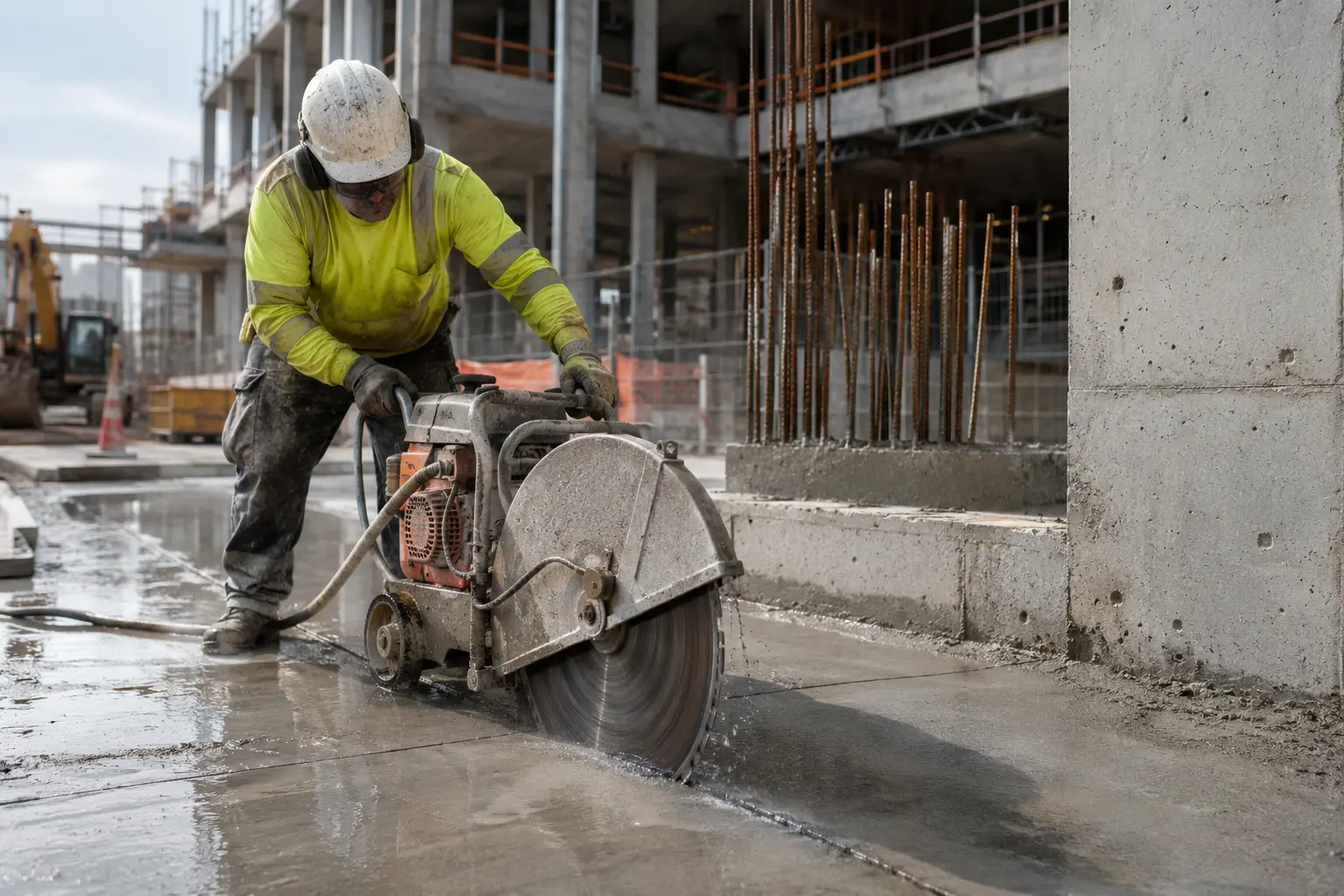
- Slab sawing: Also known as flat or road sawing, slab sawing cuts trenches in rehabilitation projects, such as manufacturing and residential renovations. These projects often require pathways for water and electrical lines, which our saws can easily access and deliver the desired outcomes.
- Wall sawing: Technicians use wall sawing techniques to modify walls, retrofit windows, and create openings for HVAC systems. Wall saws can also widen archways to accommodate large warehouse machinery, such as forklifts.
- Wire sawing: Wire saws can break down large concrete structures into smaller pieces and slice materials that conventional saw blades cannot. These tools rely on abrasion and water to make large, accurate cuts on various concrete applications.
Safety, Compliance, and Cost Considerations
Safety is a critical consideration in any concrete cutting application. As a reputable contractor ofBrisbane floor sawing services for nearly 25 years, we wear the prescribed Personal Protective Equipment (PPE), such as hard hats, safety goggles, respirator masks, earplugs, cut-resistant gloves, and steel-toe safety boots to comply with safety regulations and protect the health and well-being of our staff.
Cost is another critical factor in any concrete cutting project because the cutting depth, access limitations, equipment, and project timeline affect the overall expenses. Project managers must consider these factors when planning concrete cutting endeavours. Our guide to the cost of commercial concrete cutting explains each factor in more detail
.
Discussing these considerations with your contractor allows you to create safe, cost-effective, and efficient project timelines that produce the desired results.
Concrete Cutting Methods
Most construction projects in Australia combine several concrete-cutting techniques to achieve the desired outcomes. These methods include:
- Diamond-blade sawing: As the term suggests, this technique uses a diamond-tipped blade to cut concrete, asphalt, brick, stone, and reinforced concrete.
Unlike conventional metal blades that slice through material, diamond blades rely on abrasion, grinding the concrete as the blades rotate at high speeds. Diamond-blade saws’ speed and heavy-duty features appeal to many clients.
- Core drilling: This specialised technique creates accurate holes in concrete, reinforced concrete, brick, stone, and masonry using a hollow cylindrical drill bit that also removes a solid cylindrical piece (core).
We provide cost-effective Brisbane core drilling services to clients who require round openings for plumbing and electrical applications, HVAC ductwork, drainage systems, and utility penetrations in walls, floors, and ceilings.
- Wire sawing: Wire saws use a continuous steel cable embedded with industrial diamonds to slice concrete, steel-reinforced structures, and large infrastructure components. Technicians loop the diamond wire around the material and pull it at high speeds, enabling the diamond segments to grind through the surface and make accurate cuts.
Concrete Cutting Tools and Technologies
Highly experienced and skilled contractors use specialised equipment, such as walk-behind slab saws, handheld cutoff saws, wall-mounted track saws, and hydraulic core drills, to achieve their clients’ intended objectives.
Modern concrete cutting saws’ innovative vibration control, integrated water cooling systems, and real-time monitoring systems enable users to create accurate cuts on various structures. Nowadays, they use remote-controlled systems in risky or inaccessible locations, allowing them to maintain a safe distance from the site and manipulate the controls easily.
Contractors investing in cutting-edge technologies enable their clients to enjoy faster turnaround times, fewer errors, cleaner and safer work settings, and optimal results. If you’re planning a large-scale construction project, investing in modern, cost-effective concrete cutting services often delivers a high return on investment.
Typical Concrete Cutting Problems and Solutions
Concrete structures can be unpredictable and challenging. Whether building or renovating a residential, industrial, or commercial structure, you can overcome several concrete cutting challenges by taking proactive steps. These problems and solutions include:
- Excessive silica dust: Aggressive dry concrete cutting methods produce silica dust, which can compromise long-term respiratory health. Wet-cutting methods significantly reduce dust and improve on-site safety.
- Overheating: High friction can overheat and warp diamond blades over time. Modern concrete cutting saws’ water cooling systems and proper equipment handling prevent this scenario.
- Rebar: Reinforced concrete can cause vibrations and damage concrete saws. Contractors pre-scan concrete, use reinforced-concrete-rated diamond blades, and reduce cutting speed to prevent striking rebar and incurring costly damages.
- Equipment and blade damage: Using the incorrect blade type can damage concrete blades and equipment. Operators must match the blade type with the application or material to preserve them and ensure optimal outcomes.
- Vibration issues: Concrete saws can produce high noise and vibration levels, compromising worker safety and nearby structures. Wire or wall sawing techniques produce significantly less vibration, while wearing earplugs or earmuffs protects the user’s hearing while cutting concrete.
- Limited access or tight spaces: Large cutting machines cannot access hard-to-reach or tight spaces. Technicians often use handheld saws or compact core drills to cut concrete in these challenging settings.
Conclusion
Concrete cutting plays a critical role in modern residential, industrial, and commercial construction. Whether using diamond blades, core drilling, or wire sawing techniques, modern concrete cutting methods can deliver the desired outcomes in less time and within your budget.
Understanding concrete cutting equipment, techniques, safety requirements, and its typical challenges enables you to make informed decisions that reduce risks, minimise costly delays, prevent rework, and achieve optimal, long-term results. Expert professional guidance enables you to complete your project safely and with greater confidence.
You can trust Cutrite to exceed your expectations. Since 2003, we have provided our Australian clients with cost-effective concrete cutting services that deliver guaranteed results. Book an appointment today to schedule an on-site inspection and experience our transformative concrete cutting solutions.